Categories
literature Love Music Poetry Wagner

Wagner Special – Delivered

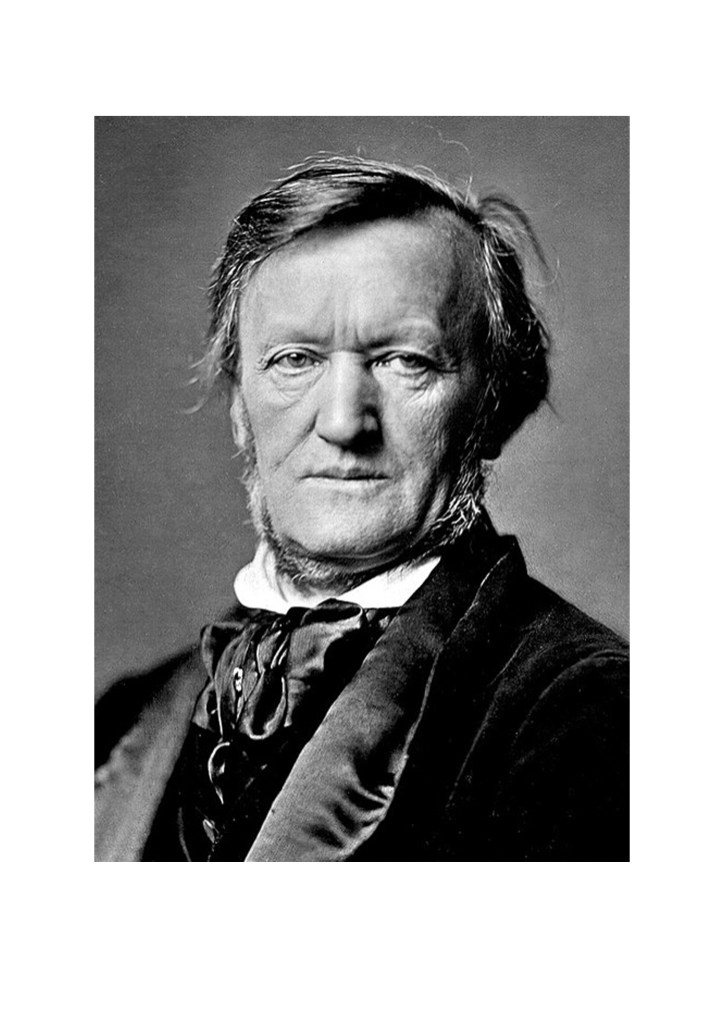
Wilhelm Richard Wagner
Saturday 14th June 2025, 10:30 — 12:00

Debunking Wagner

https://en.wikipedia.org/wiki/Controversies_surrounding_Richard_Wagner

?What myths have you heard about Wagner.

Ring:

‘Synopsis’

Royal Ballet & Opera video:

Rhingold ⬆️

Chapter 1: The Rhinegold

Chapter 2: The Valkyrie

Chapter 3: Siegfried

Chapter 4: Twilight of the Gods

Rhinemaidens:

Woglinde = Dance

Wellgunde = Music

Flosshilde = Poetry

Alberich – Elf, renouncing love

A representation of love: Stendhal‘s book titled Love

?What do you think about Alberich.

The following scenes in Chapter 1

Alberich’s repentance from sin. [Could Wagner be a Christian!?]

Wagner’s libretto — Stabreim

Groves Music Dictionary

Stabreim is a form of poetic verse

Iambic: Stress every second syllable

Shakespeare

Hamlet — “To be, or not to be: that is the question:”

Macbeth — “Double, double toil and trouble

Iambic Pentameter — 5 stress’ with a sentence of 10 syllables

e.g. Sonnet 18
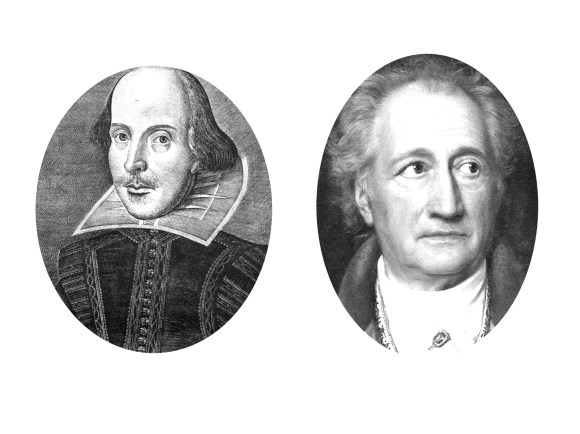
Shakespeare & Goethe known to Wagner

Henry Cuyler Bunner, American novelist and journalist, on Goethe:

Shake, Mulleary and Go-ethe, poem

My poetry books:

  1. Soaring Higher
  2. The Tara Brooch
  3. Wagner’s Ring*
  4. Blazon

*Wagner’s Ring started. Not completed at the time due to Shakespearean Tudor anachronisms. However, someone said I “can still do it.” Decided on couplet paraphrase, instead AA, BB, CC etc. Next, Simon Armitage, Poet Laureate, publishes his couplet version of the Owl and the Nightingale. Took my copy to the stage production at the Southbank Centre.

Read my incomplete paraphrase of Wagner’s Ring, Chapter 1: Rhinegold, Ii

Open mic:

Nick

Angela

Closing small talk.

Played during the opening of my reading ⬇️. Ten-stringed lyre.
"From left to right by nature’s design
Flows continuously the ready river Rhine
Lighter turquoise evenly spread
Becoming darker towards the bed
Near the floor the water dissipates
Leaving an increasingly breathable state
This vaporous man-sized space
Moves continuously and at a pace
Across the floor of the riverbed
Where no man can naturally tread
Are rough rocks and undercurrent tides
And vertical caverns unimaginably wild."

Categories
art

3 Videos From My ne plus ultra Catalogue

A Combination In Seconds

Upper Norwood Methodist Church

Music

J. S. Bach: Fugue in G minor BWV 578 ‘The Little’ Stokowski, Leopold License Info. License: Public Domain Copyright expired: Work from Author who died before 1947 [Died: 1750] Neighbouring Rights expired (EU: The term of protection for the neighbouring rights has been extended to 70 years since 1 November 2013. [2011/77/EU]: Recorded before 1962 and Published before 1962 [Recorded: 1958, Published: 1959]

Ad Digitos Curatus

South Norwood United Reformed Church

Music:

Same as above.

J. S. Bach: Fugue in G minor BWV 578 ‘The Little’ Stokowski, Leopold License Info. License: Public Domain Copyright expired: Work from Author who died before 1947 [Died: 1750] Neighbouring Rights expired (EU: The term of protection for the neighbouring rights has been extended to 70 years since 1 November 2013. [2011/77/EU]: Recorded before 1962 and Published before 1962 [Recorded: 1958, Published: 1959]

Archangel Michael Descending On St Paul’s Church

Saint Paul’s Church, Anerley

Music:

Same as above.

J. S. Bach: Fugue in G minor BWV 578 ‘The Little’ Stokowski, Leopold License Info. License: Public Domain Copyright expired: Work from Author who died before 1947 [Died: 1750] Neighbouring Rights expired (EU: The term of protection for the neighbouring rights has been extended to 70 years since 1 November 2013. [2011/77/EU]: Recorded before 1962 and Published before 1962 [Recorded: 1958, Published: 1959]

A Combination in Seconds NFT

https://app.manifold.xyz/c/ACombinationInSeconds

Categories
Videography

Prism Transition

An Arthouse Video

Photography — It was a sunny, Sunday afternoon when light was streaming through my back window. There was a gentle breeze that made the leaves on the tree in the back garden move to and fro. The poetic dancing shadows on my piano added a rare atmosphere. The perfect day to photograph a prism. One has to know about optimal sun position and angle in relation to planet Earth in order to make this document. I succeeded on my second attempt which was 365 days later. This type of photography can only happen on one day of the year in that location.

Light — If I was travelling on a wavelength of white light through a prism, I would mingle with the density of the crystal resulting in offspring of different types of light spread across the electromagnetic continuum as refracted light. Light is refracted on entry and exit of the prism.

Computer — Keynote software has a transition feature called ‘colour planes’ that separates red, green and blue. This knowledge sparked the idea to make a video of a prism. A secondary idea was the knowledge of a particular piece of music.

Music — The title of the music in ‘Prism Transition’ is ‘Spiegel Im Spiegel’ by Arvo Pärt, and was re-composed from four staffs to three by myself especially for the video. Spiegel Im Spiegel translates to Mirror in the Mirror and was the reason I included it in the poem ‘High Street! — Outside In, Inside Out’. Here is that very verse:

“And even more extraordinary: a reflection reflecting itself

Now everything keeps reversing and turn-turning about

Spiegel Im Spiegel melodies go round inside my head

On and on and on it goes, outside in, inside out…”

Illusions — The psychology of visual perception, the physics of refraction. A key term when thinking about mirror images, is: enantiomorphs. An object has the coordinates: x, y, z. An object as reflected by a mirror has the coordinate: – x, y, z. Therefore, when looking through a mirror one has to double the distance from the object to the mirror in order to obtain an accurate measurement of the reflection.

Prism Transition

Categories
Fine Art Music

ALISON – Daughter of Alice

An Arthouse Video

The title of this video production is ALISON — Daughter of Alice. The visual aesthetic is ‘high key’: still photographs using black and white reversal film and music by a contemporary composer.

This high key type of photography is crucial to attain the light and bright tones with little or no shadow akin to Hollywood portrayals of heaven. High key photography can be achieved inside the camera at the time of exposing the frame by increasing the exposure value. If you are using film, then darkroom techniques can be used during developing the film and/or printing onto photographic paper. There are also computer software programs which allow you to lighten either the grey/shadowy areas of an image or the whole image. It was this type of post processing that I used with the black and white reversal film from my SLR camera.

Composing the photographs

From black and white to colour, metaphorically speaking.

The scene is Anerley and Penge, South East London, 2019. The time was a bright summertime before the shops opened. The theme: reflections. Beckenham and Croydon were surveyed but couldn’t match the architecture, infrastructure details, street design, economic demographics and lighting. People were avoided at all costs. The law states that you have to gain consent from people before taking their photograph. Sometimes, my Photomedia degree comes in handy! The idea for the project popped into my mind one sunny day as I was just walking down the high street and happened to notice a reflection in a shop window. Before I know it, the moment had come and gone.

The Lewis Carroll Imperative!

“Curiouser and curiouser!” Alison once exclaimed in her Adventures in Wonderland. On reflection, could she have cried the same thing when Looking Through the Looking-glass? The photographs in this arthouse video are what one might see when looking into a shop window on a sunny day: the contents inside and a reflection of what is outside. Imagery Lewis Carroll would appreciate, even entertain and develop, if he was still around today? Please let me know your thoughts on this idea in the comments sections below. Thank you!

Imagine for a moment this very same Alice grew up, married her sweetheart and wanted a baby boy. But, however, she had a daughter instead. What name do you think she would christen the infant? Alison? And suppose this child grew up and happened to walk down a busy village lane just like Penge?

The Music

Im Paradisum by Karl Jenkins

My instrumentation of the music:

Acoustic piano

Electronic keyboard:

  • Piano
  • Organ
  • Recorder
  • Flute
  • French horn
  • Harp
  • Bell
  • Cimbles
  • Chior

The flute sound in this arthouse video I made into a ringtone for my mobile phone. The reason I chose the tune was because it was so light and bright and distinctive.

ALISON – Daughter of Alice
Categories
Music Poetry

GOD CREATES

Poetry

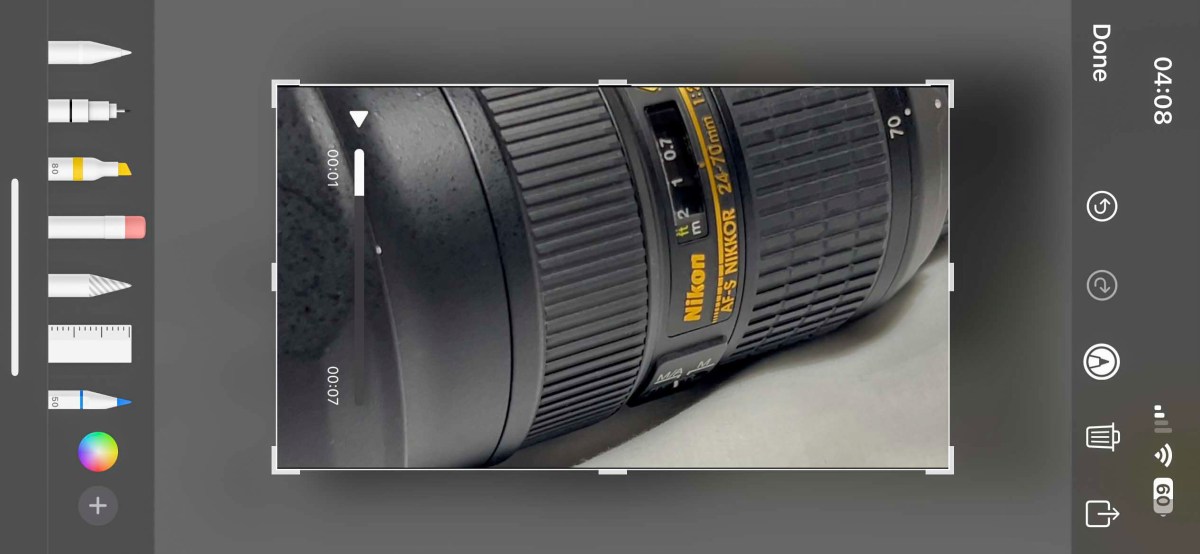
GOD CREATES was written with the sky in mind and appears in my first book. It was one of the poems that marked the start of an increase in my poetry interests following water damage to my Nikon DSLR camera. In the poem, the second person of the Trinity makes an entry, is crucified, rises from the dead, rises to the skies and returns from filling the universe to be the bridegroom at His wedding feast.

This is the only poem I have written where the title is in capital letters. Can one imagine writing anything of this nature and not use capital letters? For me the answer is: “No”. Even music I have composed on this subject has received the same treatment: a vocal chamber piece, a solo piano piece, a choral piece and an organ piece. These musical pieces, by and large, I estimate are falling within the category of virtuosity.

My GOD CREATES poem also retains, on reflection, elements of virtuosity:

  • 10 verses
  • 4 lines per verse
  • 40 lines in total
  • 3 syllables per line
  • 12 syllables per verse
  • 120 syllables in total
  • 2 words per line — except line 39
  • 8 words per verse — except last verse
  • 80 words minus 1 in total

I am sure these numbers mean something to somebody, somewhere!

Would there be poetry if there was not music? Or, should that be: Would there be music if there was not poetry? I hope your happy conclusion has considered at least one of my poems. Perhaps this one?

The music in the video

G. F. Handel (1685 – 1759), Suite Nr. 4, Sarabande. The stately pomp and majesty of this Spanish dance fitted well with the subject matter of the poem: God and God in the act of creating. The rhythmic structure of the music agrees with the rhythmic structure of the poem.

Handel wrote the music for harpsichord, originally. On this recording I am playing it on my once John Broadwood & Sons piano.

GOD CREATES

Categories
Music

THE Season #2

A composition for winter

________________________

Sleigh Ride

________________________

Music | Visuals | Words

Enjoy!

Categories
Fine Art

16th Annual Exhibition

Don’t miss it!

Categories
poetry

‘Wrynose Pass’

Wrynose Pass is a mountain road in an English National Park called The Lake District. It has been described as Britain’s most difficult road.

During a photography holiday in this part of England I was coming to the end of a particular day. I had been driving far and wide to many locations with my camera, rural and otherwise.

The time was approaching sunset when I reached Devoke Water, the last location before returning to the B & B. Although I had been to this lake before, this second visit was a trifle peculiar… What was not different was the voices of the angels and the view of the lake itself, made extra special by the setting sun with all its colours.

After the photography I returned to the car and started to make my way back but, unlike the previous occasion some years earlier, the journey was marked by a thick, nocturnal atmosphere – and I had no idea what lay ahead.

The location I chose to film this poem was an almost forgotten road somewhere that reminded me of Wrynose Pass… but where’s the car!

The first verse:

Wrynose Pass

I’m on my way back to my lodgings

Not long, I hope, ‘till I’m safely back

I set the SatNav and follow its commands

It’s getting darker and will soon be pitch black…”

The music I chose for the video is titled: Sonata quasi una fantasia (translates to: Sonata in the style of a Fantasy). Although the sonata is also known as the Moonlight Sonata, I wanted to bring out the drama and sense of fantasy when I recorded it on my piano. The recording of the music also went through a mysterious and eventful journey. The morning after I had made the final edit, I played it back on my HiFi. Immediately after this I turned the radio on and exactly the same movement from the same piece was being played.

Here is the first verse from my videobook: Wrynose Pass

Categories
poetry

‘What Is There In All Creation…?’

One evening when it was warm I took a walk to the shops. It was still daylight and the atmospheric conditions were good. The lighting was that which accompanies the setting of the sun. However, it wasn’t the setting sun that caught my senses, glorious as it may have been, but the quality of the ambient light. It was as if I was looking through a veil.

As I walked home, I found myself thinking about the first line to a Shakespeare sonnet: Shall I compare thee to a summer’s day? (sonnet 18). Much of my preoccupation at the time concerned the sky – particularly writing about it. Within 24 to 48 hours I had drafted three poems about the sky. The feel of the first line of sonnet 18 lead me to write my first line: What is there in all creation…?

The ‘What Is There In All Creation…?’ poem is written in four verses, each verse with an ABBA rhyming form. That is: line 1 rhymes with line 4 and line 2 rhymes with line 3. At the time of composing the poem, I had no knowledge of any other poem written in this style. This knowledge came later.

What Is There In All Creation…?

What is there in all creation that can compare to the sky?

She, at times, can be quite calm as well as electrifying

Also, sometimes, conveys sadness and happiness — quite confusing

This is because she is pure and 3 times very high…’

In my videobook, the music that accompanies this poem is J. S. Bach’s Prelude No. 1 from his Well-Tempered Clavier, Book One.

Here is a video clip from the poem: What Is There In All Creation…? (verse 1)

For those willing to go further, the music that concludes the video is the Ave Maria by Gounod which is based on the Prelude.

Categories
Music

Scarborough Fair

The traditional folk song, Scarborough Fair, dates back to Medieval times and refers to an old fair in Scarborough, Yorkshire. The market fair included traders, merchants, entertainers and food vendors, starting from the 14th century until the 18th century. Today, several fairs are held in remembrance of the original.

‘Scarborough Fair’ Lyrics

The lyrics in ‘Scarborough Fair’ are about unrequited love; a man trying to attain his true love. The young man requests impossible tasks from his former lover, saying that if she can perform them, he will take her back. In return, she requests impossible tasks of him, saying she will perform hers when he performs his. In the Middle Ages, the herbs mentioned in the song represented virtues that were important to the lyrics. Parsley was comfort, sage was strength, rosemary was love and thyme was courage.

Simon and Garfunkel’s Version

“Paul Simon learned the song in 1965 while visiting British folk singer Martin Carthy in London. Art Garfunkel adapted the arrangement, integrating elements of another song Simon had written called “Canticle,” which in turn was adapted from yet another Simon song, “The Side of a Hill.””

History of the Folk Song ‘Scarborough Fair’ – LiveAbout

My Version

In my re-imagined/re-composed version and recording of the traditional tune, thought was given to the costume and the videography. During the editing light balance and overall visual appearance were adjusted to convey a dreamlike, fairytale atmosphere. When I was recording the vocals it seemed, at times, as though I was fighting an invisible enemy. This gave my voice a different quality: (a) a sense of weak, youthful innocence similar to a feeling of indolence (Scarborough Fair), (b) a strong, macho/masculine presence similar to a military officer recounting events on a battlefield (Canticle).

Click here for the video: Scarborough Fair/Canticle