Categories
Music

Greensleeves + 3 Variations

After this traditional tune, I play three variations on the piano. I composed these variations in 2020.

Analysis:

Variation 1

The title of variation 1, is: “The Twos”. This name comes from a two-note chord in the right hand which acts as punctuation, whilst the left hand plays the melody in the lower part of the keyboard emulating a sonorous cello. These two-note chords are a tone or semitone apart throughout, except on one occasion. These rather terse sounding chords are always forced. The whole variation sounds like a tussle between mellow and sour.

Variation 2

The title of variation 2, is: “The Slide”.  In this variation, the left hand literary slides up and down the keyboard as fast as possible. After each slide, the right hand plays a single note which is held for a judged length of time, acting as a distinct contrast to the quick notes of the sliding left hand. The struck single notes are held depressed for as long as artistically possible. Imagine these notes being played on the down bow of a violin. NB: the slides are flamboyant, free and need not be accurate.

Variation 3

The title of variation 3, is: “The Agitator alla Toccata”. A translation of this would be: “to be played agitatedly in a manner where touch and virtuosic technique is required”. This is firmly a postmodern variation on the traditional Greensleeves tune. The pulsating left hand hammers out the melody and combines obsessively repeating notes at certain key junctures with continuous sweeps of passagework. It can be seen, and heard, as relentless driving machine-like kinetic movements at a moderately fast pace. Although the right hand retains some resemblance to the vertical movement of the melody, the notes are dissonant. On their own, one could hear a logic but, when played with the left hand the whole piece almost does not make sense. Highly entertaining with an emphatic end.

Click here to hear me play: Greensleeves + 3 Variations

Categories
Fine Art

Christ Central Church – Abstraction

Dissertation submitted for the Degree of Photomedia BA (Hons)

Chapter 1 (extract)

Christianity started in the Roman province of Palestine (present-day Israel, Palestine and Jordan) and is based on the life, teachings, death and resurrection of Jesus Christ.  Although Jesus only taught for three years and died an apparently humiliating and painful death on a cross outside Jerusalem, his birth is now celebrated around the world and is the point from which time is measured.

Keene writes that:

“Christianity grew initially as a radical movement within the much older tradition of Judaism.  Jesus was a Jew and remained faithful throughout his life to the Jewish faith, but, after his death, the new religion spread more widely among the Gentiles than the Jews.  Christianity soon developed a life of its own, apart from its mother faith, although the link between the two remained complex and problematic for a long time.

“As Christianity spread beyond the Roman Empire, the life and teachings of Jesus remained at the heart of the faith.”

(Keene, 2002:6)

Christians believe that Jesus is God, or the ‘Son of God’, who became incarnate to restore the relationship between God and mankind that had been broken by human sin.  They believe that when Jesus was crucified and rose again, he broke the hold of sin and death, and that today he reigns as Lord of all creation.  Christians can: have a personal relationship with God through Christ, live in the power of the Holy Spirit, be grafted into a community of believers, and respond to the radical teachings of Jesus.

On Church membership Keene observes:

“Today Christianity is the world’s largest religion… with some 1,500 million followers throughout the world.”

(Keene, 2002:7)
Christ Central Church – Abstraction

From:

TO WHAT EXTENT CAN PHOTOGRAPHS OF CHURCH ART AND DESIGN COMMUNICATE CHRISTIANITY?

Categories
Fine Art

Saint Mark’s Church Bell Tower – Abstraction

Dissertation submitted for the Degree of Photomedia BA (Hons)

Chapter 1 (extract)

Human communication is something that everyone recognises:

“[it] is talking to one another, it is television, it is spreading information, it is our hair style, it is literary criticism: the list is endless.”

(Fiske, 2001:1)

All communication involves signs and codes (more on this later).  In this dissertation communication is seen as the production and exchange of meanings.  Messages, or texts, interact with people in order to produce meanings, i.e.:

“it is concerned with the role of texts in our culture.”

(Fiske, 2001:2)

Therefore, the message or text is an element in a structural relationship whose other elements include external reality and the producer/reader.

“Producing and reading the text are seen as parallel, if not identical, processes in that they occupy the same place in this structured relationship.”

(Fiske, 2001:3)

In history, Church art and design was the pinnacle of human creativity and the inherent message of Christianity was communicated to people who were illiterate or poorly educated.  The arts, including photography, is not restricted by the barriers of communication, and can reach deep into people’s hearts and minds causing an experience of Christianity…

Saint Mark’s Church Bell Tower – Abstraction

From:

TO WHAT EXTENT CAN PHOTOGRAPHS OF CHURCH ART AND DESIGN COMMUNICATE CHRISTIANITY?

Categories
Poetry

‘This is the Month – Eastertide

Facts around the writing of this poem:

In the Spring of 1990 I set about writing a poem about Easter with the intention of having it published in a journal that would be available at that time. When the poem was eventually finished, it was without ‘Eastertide’ in the title. Although I had virtually no church attendance since childhood, I found myself including elements of the Easter story.

Then, before summer was in full swing, some Christians started to befriend me. They were from a local church canvassing the area. I was eventually invited to a Sunday morning meeting and someone named Colin Spurdle was due to pick me up. However, for a good reason he forgot and said he would come the following week. That Sunday came and I was so eager to go that I decided to go by myself. I have now been attending the same church for thirty years, plus.

During my years at this church, the poem was redrafted, extended and finally finished.

“This Is The Month — Eastertide”

“This is the month

When they say that it rains and pours

Down come the showers

From heaven’s open doors…”

I hope you enjoy this extract: “This Is The Month — Eastertide”

Categories
Poetry

‘The Garden of Eden’

This rhyming poem is based on the Biblical events that took place in the Garden of Eden — and includes a reading of the future. When writing these verses, care was taken to adhere to the fidelity and the sequence of events as given in the Bible.

The music that goes with this poem is the Elizabethan Serenade by Ronald Binge. It is light and grandiose with such positive, live giving vigour.

“The Garden of Eden”

“God created the garden of Eden

A pure unspoiled paradise

An ordered beautiful landscape

That could grow and increase in size…”

For the first verse of this poem, click: The Garden of Eden

Categories
Poetry

‘Swaying, Swaying in the Breeze’

It was a windy May afternoon when I was walking down the garden path. I happened to notice, it seemed for the first time, an array of beautiful flowers in bloom. Maybe it was their swaying that caught my attention. Anyway, I stopped for a closer look and saw bumble-bees indiscriminately landing on them; one, then the other. To capture this nature in action, I made a video recording with my phone.

The following morning this scene, with words, was going round my head, and before breakfast the poem was complete.

The music I paired with the poem, Beethoven’s Pathétique Sonata, echoes the back and forth movement of the flowers. For added imagination, one could imagine dancing ladies instead of flowers.

“Swaying, Swaying in the Breeze”

“Swaying, swaying in the breeze

Dancing, dancing beneath tall tree

Moving another way in slight air

So handsome, so pretty, so fair

Hues and shades, rare and fine

What invention, what design…”

Click here for: Swaying, Swaying in the Breeze

Categories
Fine Art

The London Metropolis

Iconic.

Early morning on a bright sunny day.

Sun potion and height just right; weather conditions top.

First class vantage point.

The photograph. The shot.

London looks happy… and so does the rest of the world!

Dream, London, dream. If I had a dream / I would dream of…

The London Metropolis

Categories
Fine Art

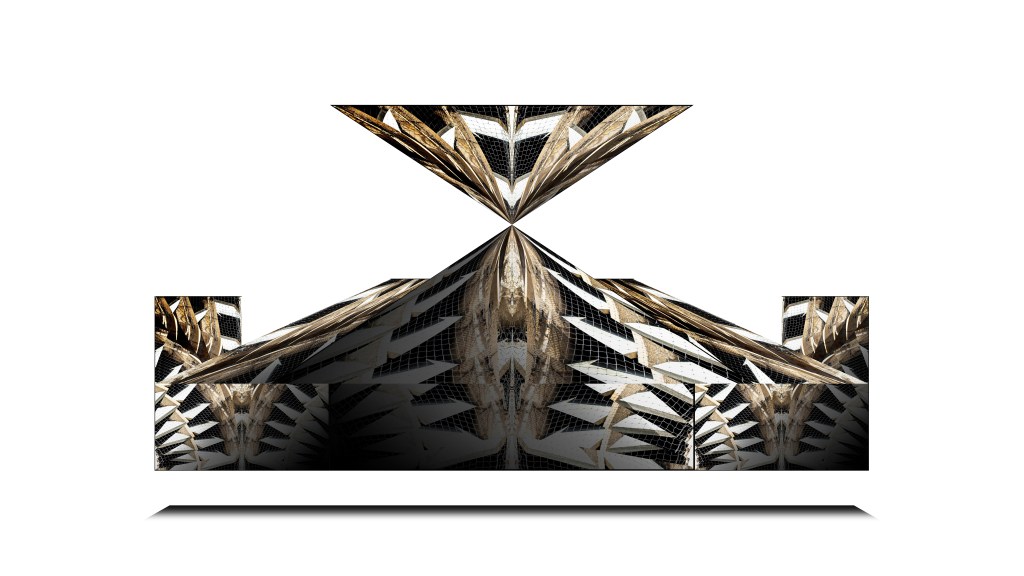
South Norwood Baptist Church

 !taste This ecclesiastical black and white desiGn.

Computerised monochrome in GOTHIC baron flavours. It’s All in the square – action.

Recommendation:

Try experiencing this image in a multitude of different ways — any which way you can. Let your imagination be the limit. Jump in and be immersed with thunderous organ music in glorious surround sound for the full effect — the louder, the better. Johann Sebastian Bach’s Passacaglia and Fugue in C minor BWV 582 always reaches parts in other people — just try not to laugh — especially at concerts. Full-stop.

South Norwood Baptist Church Art & Design No. 29

And here are the first few bars of the music to get you in the mood:

Categories
Poetry

‘Gone Fishing’

This poem came into being as a result of a theme that was set by a poetry group in Croydon, Surrey. The theme was sport, and I hadn’t a clue what to write until I was engaged in a mindless activity at home. So, during unfruitful mind activity, fishing surfaced. As I wasn’t too familiar about fishing, I visited a local angling shop to find out more… and the rest is history!

“Gone Fishing”

“It’s 3:15 am and I’ve just packed my lunch and kit
The predictive seaweed looks clammy as I check it
The shipping forecast confirms, rain is on the way
And hovering around minus two for most of the day…”

Naturally, ‘The Trout’ by Schubert leads up to the narration.

For the fist verse, click: Gone Fishing

Categories
Poetry

‘Cumbria’

This poem is a whistle-stop tour of Cumbria in the North West of England. All the places mentioned in the verses were part of my itinerary. As The Lakes were Wordsworth’s country, I felt inspired to write. Two other poems were also written here: Pennsylvania and Wrynose Pass (see above).

“Cumbria”

“I’m writing from Lakeland’s Ambleside
This holiday is making me tired
Lots to see, lots to do
(Quite comfortable at Hotel Vale View)
Lots more to do, lots more to see
Kodak is making a fortune from me!…”

The music that is before the narration is: Farewell To Stromness by Sir Peter Maxwell Davies.

And here is a sample: Cumbria

(For more Information go to the ‘Books’ page.)